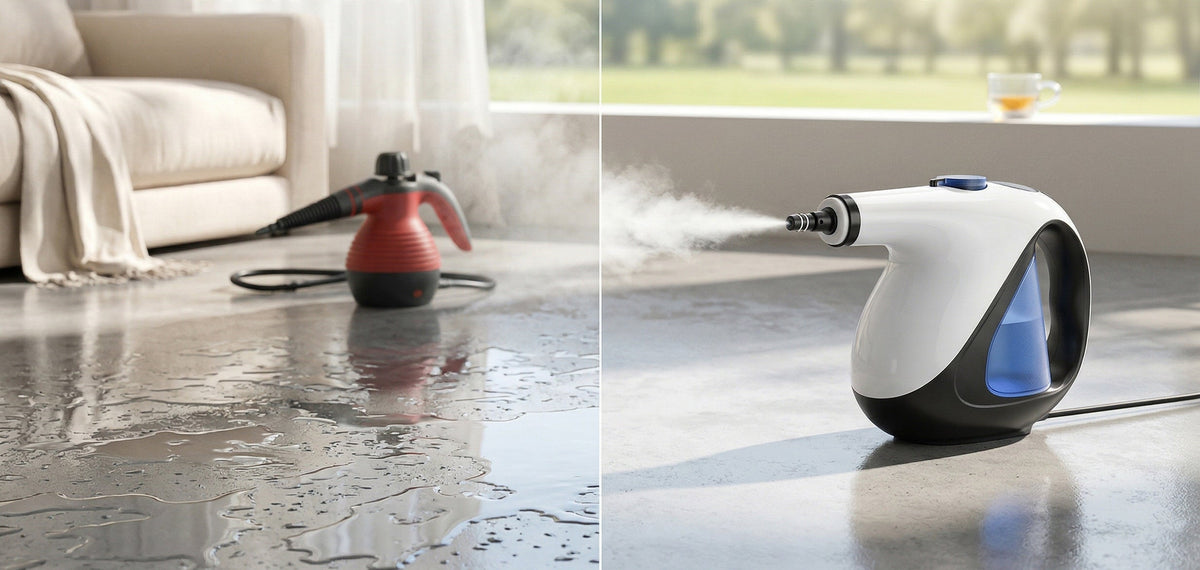
You've probably seen steam cleaners marketed with bold claims about pressure, temperature, and cleaning power. But most product listings don't explain what those numbers actually mean in practice—or why steam pressure matters so much to the quality of your clean.
The truth is, steam pressure is one of the most important and least understood factors in how well a handheld steamer for cleaning performs. Get it right, and grease lifts off stovetops, grout brightens, and fabric refreshes in seconds. Get it wrong, and you're pushing warm mist across a surface that isn't actually getting clean.
Here's what steam pressure actually means, how it affects your results, and what to look for when choosing a steamer.
What Is Steam Pressure in a Cleaner?
Steam pressure refers to the force at which water vapor is expelled from the steam cleaner's nozzle. It's measured in bars (a unit of atmospheric pressure) and determines how aggressively the steam penetrates, loosens, and displaces contaminants on a surface.
Think of it this way: low-pressure steam is like blowing warm air across a surface. High-pressure steam is like a focused, heated jet that drives moisture deep into grout lines, fabric fibers, and textured surfaces—dislodging what's embedded there rather than just sitting on top of it.
Temperature and pressure work together, but they're not the same thing. A steam cleaner can produce high-temperature vapor at low pressure, and the result is hot mist that evaporates quickly without much mechanical force behind it. Pressure is what gives steam its cleaning power beyond simple heat.
Why Pressure Matters More Than Most People Realize
Most household dirt isn't sitting loosely on the surface waiting to be wiped away. Grease bakes onto stovetops and oven interiors. Soap scum bonds to tile and glass. Mold takes hold in grout and silicone seals. Dust mites embed themselves into mattress fibers and upholstery.
Wiping with a cloth moves surface-level debris. Chemical sprays work through chemical reaction over a dwell time. Steam with sufficient pressure does something different—it physically forces its way into the contamination, breaks the bond between the dirt and the surface, and flushes it out with heat simultaneously.
This is why pressure changes the outcome so dramatically. The same surface treated with low-pressure and high-pressure steam can produce noticeably different results—not because of temperature, but because of how deeply and forcefully the steam engages with what it's cleaning.
How Different Pressure Levels Affect Cleaning Results

Low Pressure (Under 2 Bar)
Steam cleaners operating at under 2 bar of pressure produce what most users would describe as a soft steam or warm mist. The vapor reaches the surface, adds heat and moisture, and can help loosen surface-level grime when combined with wiping.
What it handles well:
- Light surface dust and fingerprints
- Fabric refreshing and odor neutralization
- Gentle sanitizing of surfaces that are already relatively clean
What it struggles with:
- Embedded grout dirt
- Baked-on kitchen grease
- Soap scum with significant buildup
- Mold in textured or porous surfaces
Low-pressure steam is useful for maintenance cleaning where surfaces are kept in good condition between deeper sessions. It's not the right tool for heavy buildup or anything requiring penetrating cleaning action.
Medium Pressure (2–3.5 Bar)
This is the functional range for most consumer handheld steamers for cleaning. At 2–3.5 bar, steam has enough force to penetrate grout lines, lift light-to-moderate grease, and reach into surface textures that a cloth can't access.
What it handles well:
- Regular bathroom tile and grout maintenance
- Kitchen countertop and appliance surfaces
- Upholstery and fabric sanitizing
- Window and glass streak removal
- General floor cleaning when paired with a flat mop head
What it still struggles with:
- Heavy grease buildup in neglected ovens or range hoods
- Deeply stained or discolored grout that hasn't been treated in months
- Professional-grade deep cleaning tasks
For most households that clean on a regular schedule, medium-pressure steam covers the vast majority of cleaning tasks effectively. This is the sweet spot for a handheld steamer for cleaning used in everyday home maintenance.
High Pressure (3.5 Bar and Above)
High-pressure steam is where results become genuinely impressive on stubborn contamination. At 3.5 bar and above, steam drives into porous surfaces, forces grease off baked surfaces, and can handle cleaning tasks that would otherwise require heavy chemical products and significant scrubbing effort.
What it handles well:
- Deeply stained tile grout
- Baked-on oven and stovetop grease
- Mold in bathroom silicone seals and corners
- Heavily soiled outdoor furniture
- Engine bay and automotive detailing (with appropriate attachments)
The trade-off at very high pressure is surface compatibility. Delicate fabrics, certain painted surfaces, and heat-sensitive materials can be damaged by sustained high-pressure steam. High-pressure systems also tend to be heavier and less portable than lighter handheld models.
For dedicated deep cleaning of resistant surfaces, high pressure is the right tool. For everyday home use across mixed surfaces, medium pressure with fast heat-up time and light weight is often more practical.
The Relationship Between Pressure, Temperature, and Heat-Up Time
Pressure and temperature are related but distinct variables in steam cleaner performance, and both matter.
Temperature determines how much thermal energy hits the surface—this is what kills bacteria, dust mites, and mold spores. Most steam cleaners reach disinfecting temperatures between 212°F and 320°F (100°C–160°C). At these temperatures, the majority of common household pathogens are destroyed within seconds.
Pressure determines how forcefully and deeply the steam penetrates. High temperature without sufficient pressure produces effective sanitizing but weaker cleaning action on embedded dirt. High pressure with adequate temperature produces both disinfection and mechanical cleaning simultaneously.
Heat-up time is where many steam cleaners fall short in everyday use. A unit that takes 3–5 minutes to reach operating pressure will simply not get used as often as one that's ready in seconds. The psychological barrier of waiting for a tool to warm up before a quick stovetop clean or bathroom refresh is real—and it affects how consistently the cleaner gets used.
Modern handheld steam cleaners have closed the gap significantly. The best current models reach full operating pressure in as little as 3 seconds, making them genuinely practical for quick everyday use rather than just scheduled deep-cleaning sessions. When every minute counts, this heat-up speed changes how you interact with the tool entirely.
How Tank Design Affects Pressure Consistency

One factor that significantly affects steam pressure—and that most buyers overlook—is tank design.
In older or lower-quality steam cleaners, the water tank and heating element are integrated into the same chamber. As water is used and the level drops, pressure can fluctuate. Refilling mid-session requires waiting for pressure to drop, adding water, and waiting again for the system to rebuild pressure before resuming—a frustrating interruption that discourages use.
More advanced designs use an isolated tank system, where the water reservoir is kept entirely separate from the heating element and pressurization chamber. This does two things:
First, it eliminates pressure fluctuation. The heating chamber maintains consistent pressure regardless of the water level in the reservoir, because the two systems operate independently.
Second, it allows safe mid-session refilling. Because the water tank is isolated from the heated components, you can add water while the unit is still running—without waiting for it to cool, depressurize, or reset. For longer cleaning sessions or larger homes, this is a meaningful practical advantage.
The isolated tank design also eliminates a common failure mode in older steam cleaners: backflow, where water from the tank re-enters the heating chamber under pressure changes, causing sudden steam bursts or inconsistent output. A properly isolated system removes this risk entirely.
Pressure and Surface Compatibility: What to Be Careful About
Higher pressure isn't always better—especially when the surface being cleaned doesn't need aggressive treatment.
Delicate fabrics — High-pressure steam can distort fibers in silk, lace, or loosely woven materials. Use lower pressure settings or a fabric-specific attachment that diffuses the steam output for garment and upholstery work.
Unsealed wood — Wood without a protective sealant can absorb steam moisture and warp or swell. Even medium-pressure steam should be used briefly and with caution on wood surfaces.
Painted surfaces — High-pressure steam can lift paint, particularly on walls or furniture with older or non-heat-stable finishes. Test a small hidden area before full application.
Laminate flooring — Excessive steam moisture can seep into seams and cause swelling or delamination over time. Use a flat mop attachment with brief contact and avoid saturating any single area.
Electronics and heat-sensitive materials — Steam and electronics don't mix. Keep steam away from vents, screens, and any component not rated for heat or moisture exposure.
The rule of thumb: match the pressure to the surface and the task. A handheld steamer for cleaning with adjustable steam output gives you more control across different surfaces—using lower output where the material is delicate and full pressure where the cleaning task demands it.
What Pressure-Related Features to Look for in a Handheld Steamer
When evaluating a steam cleaner on pressure-related performance, here's what actually matters:
Stated pressure rating — Look for a unit operating in at least the 2–3.5 bar range for effective everyday cleaning. Anything under 2 bar is likely to underperform on anything beyond surface-level grime.
Heat-up time to full pressure — This is the real-world usability factor. A 3-second heat-up means the tool gets used. A 3-minute heat-up means it stays in the cabinet. Prioritize fast pressure build for daily-use tools.
Isolated tank design — Ensures consistent pressure throughout the session and allows mid-session refilling without interruption. This is a structural quality indicator, not just a convenience feature.
Continuous steam mode — Maintaining pressure output manually through a trigger requires constant finger or hand tension. A touch-activated continuous mode locks the steam on without held pressure, reducing fatigue during longer sessions and maintaining steadier output.
Adjustable steam output — Not every task needs maximum pressure. A variable steam control lets you dial down for delicate surfaces and up for heavy-duty cleaning without switching tools.
Attachment variety — Different attachments affect how pressure is distributed across the surface. A concentrated nozzle delivers focused, high-impact pressure for grout and crevices. A wider head or brush attachment diffuses pressure for larger surface areas and fabric.
Real-World Performance: What Pressure Differences Look Like
To make this concrete, here's how pressure level differences play out on common household cleaning tasks:
Bathroom grout — Low pressure leaves grout visually similar after cleaning. Medium pressure lightens embedded dirt noticeably. High pressure or targeted medium pressure with the right nozzle can restore grout to close to original color on surfaces that haven't been deep-cleaned in months.
Stovetop grease — Low pressure softens grease slightly, still requires significant manual scrubbing. Medium pressure loosens grease enough that a wipe removes most residue. High pressure blasts baked-on grease loose with minimal wiping required.
Upholstery refresh — Low-to-medium pressure is ideal. It penetrates fibers, kills dust mites, and neutralizes odors without saturating the fabric. High pressure risks distorting the surface texture of many upholstery materials.
Window and glass — Medium pressure removes streaks and surface residue cleanly. Too much pressure on glass can cause uneven moisture distribution and streaking after drying if not wiped immediately.
Kitchen appliances — Medium to high pressure handles the textured surfaces, vents, and crevices of microwaves, refrigerator seals, and dishwasher interiors effectively—reaching where sprays can't and where wiping alone misses.
The Bottom Line
Steam pressure isn't a marketing number—it's the mechanical variable that determines whether your steam cleaner actually cleans or just wets surfaces. Understanding what pressure level your cleaning tasks require, and matching that to a unit with the right specifications, is the difference between a tool that earns its place in your routine and one that sits unused after the first few tries.
For everyday home use, a handheld steamer for cleaning that operates in the 2–3.5 bar range, heats up in seconds, uses an isolated tank for consistent pressure and easy refilling, and offers a continuous steam mode covers the full range of regular household cleaning tasks effectively—without the surface risks of excessive pressure or the frustration of a tool that takes too long to get ready.
Pressure matters. Choose accordingly.
Frequently Asked Questions
What is a good steam pressure for a home steam cleaner? For most household cleaning tasks, a steam cleaner operating between 2 and 3.5 bar provides effective cleaning power across bathrooms, kitchens, upholstery, and floors. Higher pressure is beneficial for deep cleaning stubborn grout or baked-on grease but requires more care on delicate surfaces.
Does higher steam pressure mean better cleaning? Not always. Higher pressure delivers more aggressive cleaning action on tough contamination but can damage delicate fabrics, unsealed wood, and certain painted surfaces. The best approach is matching pressure level to the surface and task rather than always using maximum output.
How does steam pressure affect disinfection? Disinfection is primarily a function of temperature rather than pressure. Most steam cleaners reach temperatures that kill common bacteria, viruses, and dust mites on contact. Pressure affects how deeply the steam penetrates the surface—which matters for embedded contamination—but the thermal disinfecting action occurs regardless of pressure level.
Why does my steam cleaner lose pressure mid-session? Pressure drops mid-session are typically caused by water level depletion in an integrated tank or by a poorly designed heating system that can't maintain output consistently. Steam cleaners with isolated tank designs maintain more consistent pressure throughout the session and allow mid-session refilling without the unit needing to cool or depressurize.
How long does it take a handheld steamer to reach full pressure? It varies significantly by model. Older designs take 3–5 minutes to build full pressure. Modern handheld steamers reach operating pressure much faster—top models in as little as 3 seconds—making them practical for quick, unplanned cleaning tasks rather than only scheduled sessions.
Is continuous steam mode better than trigger-controlled steam? For longer cleaning sessions, yes. Continuous mode maintains steady pressure output without requiring held tension on a trigger, reducing hand fatigue and delivering more consistent steam flow. Trigger control is useful for short bursts on targeted spots but becomes tiring over an extended session.
The ADICOM Handheld Steam Cleaner reaches full steam pressure in 3 seconds, features an isolated tank for consistent output and mid-session refilling, and includes a touch-activated continuous steam mode—built for everyday cleaning performance without the wait or the effort. Learn more here.