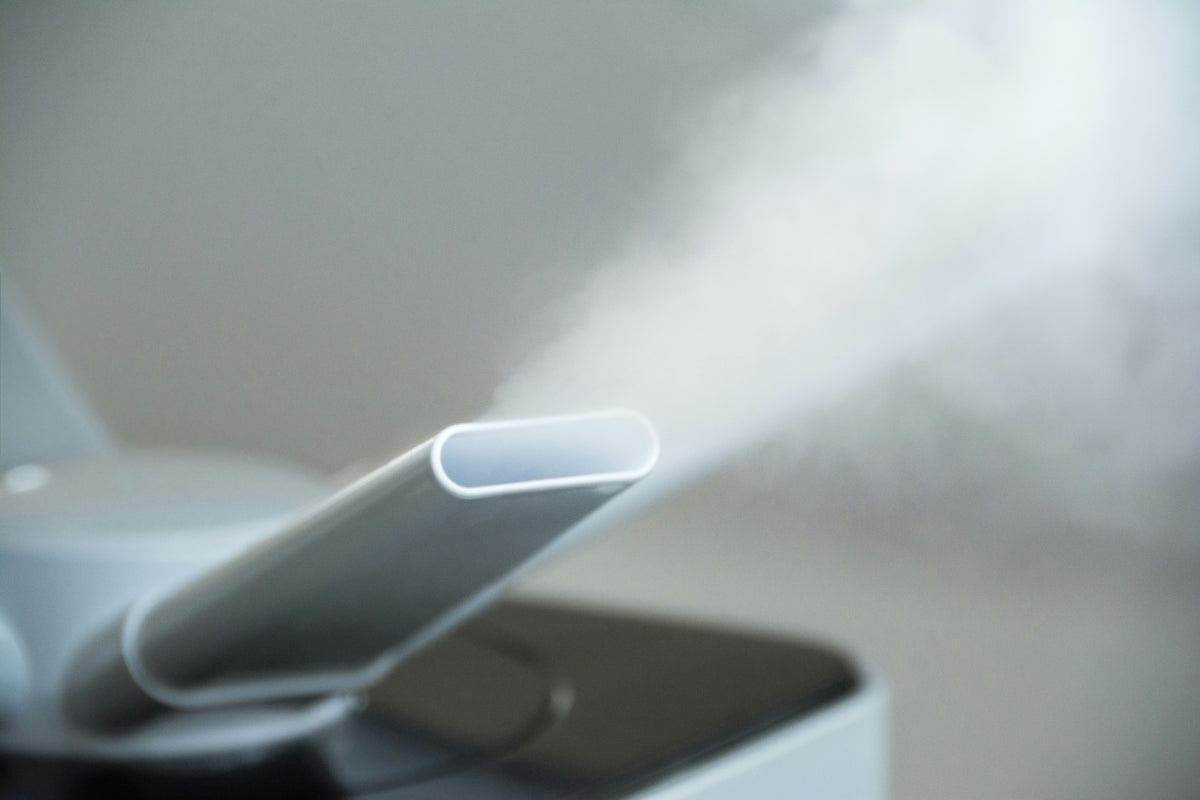
A steam cleaner handheld unit should leave surfaces clean and nearly dry within seconds. That's the premise—high-temperature vapor blasts away grime, evaporates almost immediately, and leaves no residue behind.
So why do so many users end up with puddles on their countertops, damp patches on their floors, and streaks across their tile that weren't there before?
Excess moisture from a handheld steam cleaner isn't just inconvenient. On hardwood floors, it can cause warping. On laminate, it seeps into seams and causes swelling. On fabric, it leaves water marks. On tile, it produces exactly the kind of streaking that makes a surface look worse after cleaning than before.
The problem isn't steam cleaning as a method. It's specific design and usage failures that cause moisture to accumulate rather than evaporate. Understanding those failures is the first step to avoiding them—and to getting the clean, dry result that steam cleaning is actually capable of delivering.
How Steam Cleaning Is Supposed to Work
To understand why excess moisture happens, it helps to understand what the process should look like when it works correctly.
A properly functioning steam cleaner handheld unit heats water to a high temperature—typically between 212°F and 320°F (100°C–160°C)—and expels it as pressurized vapor through a nozzle or attachment head. At these temperatures, the vapor is genuinely dry steam: water molecules carrying significant thermal energy, in a gaseous state, with very little residual liquid.
When this dry steam contacts a surface, it transfers heat rapidly, loosening contamination and killing pathogens. The small amount of moisture involved evaporates within seconds because the surface has been heated by the steam itself. The result is a clean, dry surface with no standing water.
That's the ideal. The gap between that ideal and what many steam cleaners actually deliver comes down to several specific mechanical and design factors.
Reason 1: Low Operating Temperature Produces Wet Steam
The most common cause of excess moisture is a steam cleaner handheld unit that doesn't reach or maintain a high enough operating temperature.
Water heated to just above boiling point—around 212°F—produces steam, but it's wet steam: a mix of water vapor and tiny suspended water droplets that haven't fully converted to gaseous form. This wet steam carries significantly more liquid than true dry steam and deposits that liquid directly onto whatever surface it contacts.
The higher the operating temperature, the drier the steam. Units that heat water to 230°F, 250°F, or higher produce steam with a lower moisture content, which means less liquid is deposited per square inch of surface and evaporation happens faster.
Budget handheld steam cleaner units often sacrifice temperature performance to reduce cost. The result is a unit that technically produces steam but delivers a wetter output than the temperature and pressure specifications suggest—leaving surfaces damp rather than dry after treatment.
What to look for: Operating temperature specifications above 212°F, ideally in the 230°F–320°F range. Units that specify dry steam output rather than just steam temperature are explicitly addressing this variable.
Reason 2: Inconsistent Pressure Causes Moisture Spikes

Steam pressure and moisture content are directly related. When pressure drops mid-session, the steam output shifts from high-temperature vapor toward wetter, lower-energy steam that carries more liquid.
In integrated tank designs—where the water reservoir and heating chamber share the same space—pressure drops as the water level decreases. The heating element has less water to work with, thermal efficiency decreases, and the steam produced becomes progressively wetter as the session continues.
This is why many users notice that a steam cleaner handheld unit performs well at the start of a session and leaves increasingly damp results as it approaches empty. The unit isn't failing—it's working exactly as its design allows, which is the problem.
Pressure spikes can also occur when water that hasn't fully converted to steam gets pushed through the nozzle under pressure changes. This produces sudden bursts of liquid water alongside the steam output—visibly wetting the surface in a way that standard steam vapor wouldn't.
What to look for: Isolated tank designs that keep the water reservoir separate from the heating chamber. This allows consistent pressure to be maintained throughout the session regardless of water level, and eliminates the pressure fluctuation that causes wet steam spikes.
Reason 3: Slow Heat-Up Time Means Cold-Start Moisture
Every handheld steam cleaner produces its wettest steam at startup—during the heat-up phase when the water is transitioning from liquid to vapor and the system hasn't yet reached full operating pressure and temperature.
Units with slow heat-up times—3 to 5 minutes is common in older designs—spend a longer period in this wet steam phase before reaching optimal output. During this time, users often begin cleaning before the unit is fully ready, depositing significantly more moisture on surfaces than the unit will produce once it reaches operating temperature.
Even after reaching full temperature, units with slow heat-up times tend to have lower thermal mass and drop back toward wet steam output more quickly when the nozzle is held against a cool surface that rapidly absorbs heat from the steam.
Modern steam cleaner handheld designs have addressed this directly. The best current models reach full operating temperature in as little as 3 seconds—passing through the wet steam startup phase so quickly that it's essentially a non-factor in practical use. The unit is at full, dry steam output almost immediately, which means the surface sees optimal steam from the first second of cleaning.
What to look for: Heat-up times under 30 seconds for everyday usability. Top-performing models in the 3–10 second range eliminate the cold-start moisture problem almost entirely.
Reason 4: Overapplication From Trigger-Hold Controls
Even a well-designed handheld steam cleaner can deposit excess moisture if the user applies more steam than the surface needs—and many steam cleaner designs make overapplication easy to do accidentally.
Traditional trigger-controlled steam release requires the user to hold the trigger depressed throughout the cleaning pass. The natural tendency is to apply sustained pressure without variation, which means surfaces receive the same steam output whether they need it or not. Grout lines that need sustained steam get the same treatment as sealed tile surfaces that need only a brief pass.
On surfaces with limited heat absorption capacity—glass, certain plastics, sealed smooth tile—sustained steam application deposits more moisture than can evaporate during the cleaning pass. The result is standing water on the surface that the user then needs to wipe away, which defeats much of the efficiency benefit of steam cleaning.
Additionally, sustained trigger holding causes hand fatigue. As the session progresses, users lose precise control over the trigger, leading to inconsistent steam output and unintentional overapplication during the moments when hand tension relaxes.
What to look for: Touch-activated continuous steam mode that locks steam on with a single tap rather than requiring held trigger pressure. This gives the user precise control over when steam is applied without the fatigue that causes overapplication, and allows quick deactivation when moving to a surface that needs less steam.
Reason 5: Wrong Attachment for the Surface
Attachments aren't interchangeable in terms of moisture output. A concentrated nozzle that works correctly on grout delivers a focused, high-pressure steam stream that can saturate a flat smooth surface with more moisture than it can absorb and evaporate quickly.
Many users pick an attachment based on size or what seems logical for the task rather than on steam dispersion characteristics—and apply a high-concentration nozzle to a surface that would perform better with a wider, diffused head. The result is localized moisture buildup that takes longer to evaporate or requires wiping.
Similarly, using a fabric attachment on a hard surface—or a hard surface nozzle on fabric—produces the wrong steam dispersion pattern for the material, leading to either insufficient cleaning or excess moisture deposition.
What to look for: A steam cleaner handheld with a practical range of attachments and clear guidance on which attachment is appropriate for each surface type. A wider brush or floor head diffuses steam output across a larger area, reducing moisture concentration per square inch. A pinpoint nozzle concentrates steam for grout and crevices but should be used with appropriately brief contact time on smooth sealed surfaces.
Reason 6: Integrated Tank Design and Backflow Risk
Older handheld steam cleaner designs with integrated tanks—where the water reservoir, heating element, and pressurization all occur in the same chamber—carry a specific moisture risk beyond simple pressure inconsistency: backflow.
Backflow occurs when pressure changes inside the chamber cause unheated water to be pushed toward the nozzle alongside steam output. The result is a sudden expulsion of liquid water mixed with steam—a burst of wet output that can visibly wet a surface and potentially damage heat-sensitive materials.
Backflow is more likely to occur when the unit is tilted, when water is added mid-session to an integrated system, or when pressure fluctuates during the heating cycle. It's unpredictable and difficult to control, which makes it a meaningful practical problem for any user trying to achieve consistent results.
An isolated tank design eliminates this risk by keeping the water reservoir physically separate from the heating and pressurization system. Water moves from the reservoir to the heating chamber in a controlled, metered way rather than sharing the same pressurized space. The result is consistent steam output without backflow risk—and the ability to refill the tank mid-session without waiting for the unit to cool or depressurize.
What to look for: Explicit isolated tank or separated tank design. Units that allow mid-session refilling while running are a reliable indicator that the tank is isolated, since integrated systems cannot safely accept water while pressurized.
Reason 7: Holding the Nozzle Too Close or Too Long
Even the best-designed steam cleaner handheld unit will leave excess moisture if used incorrectly—and the two most common technique errors are holding the nozzle too close to the surface and dwelling too long in one spot.
Distance matters because steam spreads and loses thermal energy as it travels. At the correct distance—typically 1 to 4 inches depending on the attachment—the steam has expanded slightly and delivers heat across a broader contact area. Too close, and the full force of concentrated steam hits a small point on the surface, depositing more moisture than that area can evaporate while simultaneously risking surface damage from heat concentration.
Dwell time matters because every surface has a limit to how much heat and moisture it can absorb and evaporate within a given time window. Slow, sustained passes on a single area—particularly on smooth sealed surfaces—saturate the area faster than evaporation can keep pace. Quick, deliberate passes allow the surface to recover between passes rather than accumulating moisture.
These are technique issues, not equipment issues—but they're worth understanding because even a quality handheld steam cleaner can produce excess moisture if used without attention to distance and dwell time.
What a Well-Designed Handheld Steam Cleaner Does Differently

Pulling together the failure points above, here's what separates a steam cleaner that leaves surfaces dry from one that leaves them damp:
Fast heat-up to full temperature — Minimizes the wet steam startup phase. Units reaching operating temperature in 3–10 seconds pass through this phase so quickly that cold-start moisture is effectively eliminated.
Isolated tank design — Maintains consistent pressure and temperature throughout the session regardless of water level. Eliminates backflow risk. Allows mid-session refilling without interruption or pressure reset.
Consistent operating pressure — Dry steam output that doesn't degrade as the session progresses. No pressure spikes that produce sudden liquid bursts.
Touch-activated continuous steam mode — Eliminates trigger fatigue and the overapplication it causes. Gives the user precise on/off control without sustained hand tension.
Appropriate attachment range — Different heads for different surfaces, with diffused output options for smooth surfaces that don't need concentrated steam impact.
Lightweight build — Reduces fatigue during longer sessions, which directly affects user control and the likelihood of overapplication through inattention.
Surfaces Most Affected by Excess Moisture
Not all surfaces respond to excess moisture the same way. Some are forgiving; others show damage quickly.
Hardwood floors — Highly sensitive. Excess moisture causes grain raising, warping, and finish bubbling with repeated exposure. Use a steam cleaner handheld with controlled output and minimal dwell time. Brief passes only.
Laminate flooring — Moisture that reaches seams causes swelling and delamination that is typically irreversible. Use steam on laminate sparingly and with a diffused attachment only.
Natural stone (marble, travertine) — Porous stones absorb moisture and can develop staining or surface changes with excess water exposure. Sealed stone is more tolerant, but sustained steam application should be avoided.
Upholstery and fabric — Excess moisture leaves water marks and can cause color bleeding in certain fabrics. Use a fabric-specific attachment that diffuses steam output, and allow adequate drying time between passes.
Painted walls — High moisture can cause paint to bubble or lift, particularly on older or non-moisture-rated finishes. Brief, targeted steam application is appropriate; sustained exposure is not.
Tile and sealed surfaces — Most tolerant of steam moisture, but standing water from overapplication still causes streaking after drying. The solution is controlled application rather than wiping after the fact.
The Bottom Line
Excess moisture from a steam cleaner handheld unit is almost always a design or technique problem—not an inherent limitation of steam cleaning as a method.
The right handheld steam cleaner heats up fast enough to skip the wet steam startup phase, maintains consistent pressure through an isolated tank design, delivers dry steam output that evaporates quickly, and gives the user precise control over application through continuous steam mode and appropriate attachments.
When those variables are in place, steam cleaning delivers exactly what it promises: surfaces that are genuinely clean, sanitized without chemicals, and dry within seconds of treatment. The moisture problem isn't unavoidable—it's the result of specific design and usage failures that the right equipment addresses directly.
Frequently Asked Questions
Why does my steam cleaner leave water on the floor? The most common causes are low operating temperature producing wet steam, pressure drops in an integrated tank design, or overapplication from holding the nozzle too close or too long. A steam cleaner with an isolated tank design, fast heat-up time, and continuous steam mode addresses all three.
Is it normal for a handheld steam cleaner to leave surfaces wet? No. A properly functioning steam cleaner should leave surfaces nearly dry within seconds of treatment. Persistent surface moisture indicates a design limitation—usually related to operating temperature, pressure consistency, or tank design—or a technique issue such as incorrect nozzle distance or excessive dwell time.
Can excess steam moisture damage hardwood floors? Yes. Repeated exposure to excess moisture from a steam cleaner can cause hardwood to warp, raise grain, and develop finish damage over time. Use a steam cleaner with controlled, dry steam output on hardwood floors, with brief passes and no sustained application in one area.
How does an isolated tank reduce excess moisture? An isolated tank keeps the water reservoir separate from the heating chamber, maintaining consistent pressure and temperature throughout the session. This prevents the pressure drops and backflow that cause wet steam spikes—keeping steam output dry and consistent from start to finish.
What attachment should I use to reduce moisture on smooth surfaces? A wider brush or flat head attachment diffuses steam output across a larger contact area, reducing moisture concentration per square inch on smooth sealed surfaces. Pinpoint nozzles deliver concentrated output better suited to grout lines and crevices, where brief, targeted application is appropriate.
Does a faster heat-up time mean less moisture? Yes, indirectly. Faster heat-up means the unit spends less time in the wet steam startup phase—where water is transitioning from liquid to vapor and steam output carries more liquid. Units that reach full operating temperature in 3–10 seconds effectively eliminate this phase, producing dry steam output from the first seconds of use.
The ADICOM Handheld Steam Cleaner reaches full steam temperature in 3 seconds, uses an isolated tank design for consistent dry steam output throughout the session, and features touch-activated continuous steam mode for precise, fatigue-free control—built to deliver the clean, dry result steam cleaning is supposed to produce. Learn more here.