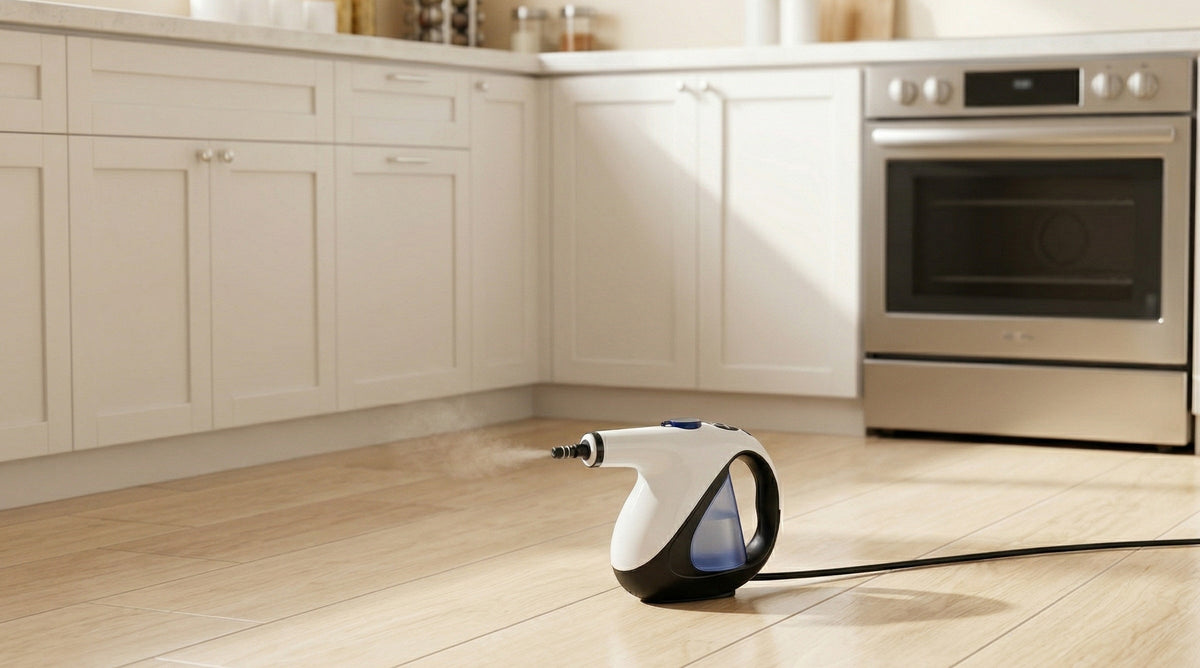
Walk down any cleaning aisle and you'll find dozens of sprays, wipes, and solutions promising to disinfect your home. For years, chemical cleaners have been the default answer to killing germs and cutting through grime.
But a growing number of households are switching to a different approach: steam disinfection cleaners. No chemicals. No residue. Just heat.
So which method actually works better? And is steam disinfection a genuine alternative to chemical cleaning, or just a trend?
Let's look at both honestly.
What Is Chemical Cleaning?
Chemical cleaning uses liquid or spray-based solutions—bleach, quaternary ammonium compounds, hydrogen peroxide, or alcohol-based formulas—to kill bacteria, viruses, and mold on surfaces.
It's the standard most households grew up with. Spray the surface, let it sit for the required contact time, wipe it off. Done.
Chemical disinfectants are widely available, relatively inexpensive, and have a long track record of effectiveness when used correctly. But "when used correctly" is doing a lot of work in that sentence. Most people don't leave disinfectants on long enough, use the wrong product for the surface, or inadvertently create residue buildup over time.
What Is Steam Disinfection?

A steam disinfection cleaner uses superheated water vapor—typically between 212°F and 320°F (100°C–160°C)—to penetrate and destroy bacteria, viruses, dust mites, mold spores, and other contaminants on contact.
There are no active chemical ingredients. The disinfecting agent is heat itself.
Steam reaches into grout lines, fabric fibers, and surface textures that sprays often sit on top of rather than penetrating. And because it evaporates almost immediately, it leaves no chemical residue behind on the surfaces it treats.
Modern handheld steam cleaners are compact, lightweight, and fast-heating—some reaching full steam temperature in as little as 3 seconds—making them practical for everyday home use rather than just deep-cleaning sessions.
Head-to-Head: Steam Disinfection vs Chemical Cleaning
1. Effectiveness Against Germs and Bacteria
Both methods can kill pathogens effectively—but the mechanism and reliability differ.
Chemical disinfectants work through active ingredients that chemically break down or disrupt bacteria and viruses. Their effectiveness depends heavily on concentration, contact time, and whether the product is appropriate for the specific pathogen you're targeting. Using the wrong product, or not leaving it on long enough, significantly reduces effectiveness.
Steam disinfection works through sustained heat exposure. At temperatures above 212°F, most bacteria, viruses, dust mites, and mold spores are destroyed within seconds of contact. Heat doesn't discriminate—it's effective across a broad range of pathogens without needing to match a specific formula to a specific threat.
For surfaces where thorough chemical contact is difficult—grout, fabric, rubber seals, tile edges—steam often penetrates more effectively than a spray that pools on the surface.
Winner: Tie — both are effective when used correctly, but steam has an advantage on porous and textured surfaces
2. Chemical Residue and Surface Safety
This is where steam disinfection has a clear edge.
Chemical cleaners, even when wiped down, frequently leave trace residue on surfaces. On kitchen countertops, this means potential contact with food. On floors, it means residue that children and pets walk through and can track into their mouths. On upholstery, it can cause discoloration or fiber breakdown over time.
Many chemical disinfectants also carry warnings about ventilation, skin contact, and mixing with other products. Used improperly—or too frequently—they can cause surface damage, respiratory irritation, or chemical sensitivity reactions.
A steam cleaner leaves nothing behind except a small amount of moisture that evaporates quickly. No residue. No fumes. No surface compatibility concerns for most common materials.
Winner: Steam disinfection cleaner
3. Surface Versatility
Chemical cleaners are often surface-specific. Bleach-based products can discolor fabric and damage certain metals. Alcohol-based formulas can strip finishes from wood. Many products explicitly warn against use on certain surfaces.
Steam is inherently more versatile. A handheld steam cleaner can move across tile grout, kitchen appliances, bathroom fixtures, couch fabric, window tracks, and baseboards using the same unit and often just by switching attachments. No product switching, no compatibility research, no risk of accidentally using the wrong formula on the wrong surface.
That said, steam isn't appropriate for every surface. Unsealed wood, delicate fabrics, and certain painted surfaces can be damaged by sustained moisture and heat. Checking manufacturer guidance before steaming a new surface type is always worthwhile.
Winner: Steam disinfection cleaner (with some exceptions)
4. Speed and Convenience
Chemical cleaning requires: finding the right product, applying it, waiting the required dwell time (often 30 seconds to several minutes depending on the disinfectant), then wiping—and sometimes rinsing if the product leaves residue.
A modern steam disinfection cleaner heats up in seconds—top models in as little as 3 seconds—and begins disinfecting on contact. There's no dwell time to wait for. Move the steam head across the surface and it's done.
For quick cleanups between deeper sessions, steam is genuinely faster in practice. A 30-second burst across a stovetop or bathroom sink takes less time and effort than locating a spray bottle, applying, waiting, and wiping.
Winner: Steam disinfection cleaner
5. Cost Over Time
Chemical disinfectants are cheap per bottle but represent an ongoing cost. A household that cleans regularly will go through multiple bottles per month across different product categories—bathroom disinfectant, kitchen spray, floor cleaner, mold spray, fabric refresher. These costs accumulate steadily.
A steam cleaner has a higher upfront cost but essentially zero ongoing supply cost. The only input is tap water. Over a 12-to-24-month period, the steam cleaner typically becomes the more economical option for households that clean frequently.
Winner: Steam disinfection cleaner (long-term)
6. Environmental Impact
Chemical disinfectants involve plastic packaging, chemical manufacturing, and compounds that enter the water supply after rinsing. Some active disinfectant ingredients—particularly certain quaternary ammonium compounds—have raised environmental and aquatic toxicity concerns with prolonged exposure.
Steam cleaning uses only water. No packaging waste, no chemical runoff, no manufacturing of active compounds. For environmentally conscious households, this difference is significant.
Winner: Steam disinfection cleaner
7. Specific Use Cases Where Chemicals Still Win
To be fair, there are situations where chemical disinfectants remain the more appropriate tool.
High-pathogen environments — In clinical or post-illness scenarios where a specific, verified kill rate against a particular pathogen is required, EPA-registered chemical disinfectants with documented efficacy data offer a clearer guarantee than heat alone.
Large surface area, fast application — Spraying and wiping a large countertop or floor section can be faster than moving a handheld steam unit across the same area, particularly when deep penetration isn't the goal.
Surfaces incompatible with steam — Unsealed wood, certain electronics, and heat-sensitive materials need chemical alternatives where steam would cause damage.
Winner: Chemical cleaning (in specific scenarios)
Who Should Use a Steam Disinfection Cleaner?

A steam disinfection cleaner is the better primary cleaning tool for:
- Households with young children or pets where chemical residue on floors and surfaces is a concern
- Anyone with respiratory sensitivities or chemical allergies who reacts to fumes or fragrance in cleaning products
- Homes with mixed surface types — grout, tile, upholstery, appliances — where one tool needs to handle multiple jobs
- Environmentally conscious households looking to reduce plastic waste and chemical use
- Regular cleaners whose ongoing supply costs for chemical products add up meaningfully over time
Chemical disinfectants remain a useful backup for targeted use — post-illness deep cleans, specific pathogen concerns, or surfaces incompatible with heat and moisture.
What to Look for in a Steam Disinfection Cleaner
If you're ready to add a steam cleaner to your routine, here are the features that actually matter:
Fast heat-up time — Anything over 60 seconds to reach operating temperature will discourage regular use. The best handheld models reach full steam in under 10 seconds, with top performers hitting it in 3 seconds.
Isolated water tank design — Older steam cleaner designs can experience backflow or pressure buildup when refilling. An isolated tank keeps the water reservoir fully separated from the heating element, allowing safe mid-session refilling without waiting for the unit to cool.
Lightweight build — A heavy steam cleaner causes fatigue quickly, especially when working on vertical surfaces like walls, appliances, or windows. Look for units under 2.5 lbs for comfortable extended use.
Continuous steam mode — Manually holding a trigger throughout a cleaning session causes hand fatigue. A touch-activated continuous steam mode lets you clean hands-free without constant pressure on the control.
Practical attachment set — Different surfaces need different heads. A good attachment set covers flat surfaces, grout lines, fabric, and narrow gaps without requiring a separate tool for each.
Sufficient cord length — A cord under 8 feet will have you unplugging and moving between outlets frequently. 10 feet or more gives you room-to-room flexibility without constant interruption.
The Bottom Line
Chemical cleaning isn't going away, and it doesn't need to. But the case for making a steam disinfection cleaner your primary cleaning tool is genuinely strong—particularly for households where chemical residue, recurring supply costs, or surface versatility are real concerns.
Steam disinfects without chemicals, penetrates where sprays can't reach, leaves no residue, and costs almost nothing to operate after the initial purchase. For the majority of everyday home cleaning tasks, it does the job as well or better than chemical alternatives—with fewer trade-offs.
The right approach for most households isn't choosing one over the other entirely. It's using steam as the default for regular cleaning and keeping targeted chemical disinfectants for the specific situations where they have a clear advantage.
Frequently Asked Questions
Does steam cleaning actually disinfect? Yes. Steam at temperatures above 212°F destroys the majority of common household bacteria, viruses, dust mites, and mold spores on contact. The heat denatures proteins and disrupts cell membranes, effectively killing pathogens without chemical agents.
Is steam cleaning safe around children and pets? Steam itself leaves no chemical residue, making it one of the safest cleaning methods for households with children and pets. The steam is hot during use and standard caution should be applied, but once the surface dries—typically within minutes—there are no lingering chemicals or fumes.
Can a steam cleaner replace all chemical cleaners? For most regular household cleaning, yes. For specific post-illness disinfection or surfaces incompatible with moisture and heat, keeping a targeted chemical disinfectant as a backup is still worthwhile.
How long does it take a steam cleaner to heat up? It varies by model. Older designs typically take 3–5 minutes. Modern handheld steam cleaners heat up significantly faster, with the best models reaching operating temperature in as little as 3 seconds.
Can I use a steam cleaner on fabric and upholstery? Yes, for most upholstery fabrics. Steam is particularly effective at refreshing fabric, killing dust mites, and removing odors. Always check the fabric care label and test a small hidden area first, as delicate or heat-sensitive fabrics may not be suitable.
What surfaces should I avoid steaming? Avoid using steam on unsealed hardwood or natural stone, heat-sensitive painted surfaces, certain delicate fabrics, and electronics. When in doubt, check the manufacturer's guidance for the specific surface.
The ADICOM Handheld Steam Cleaner heats up in 3 seconds, weighs just 2 lbs, and features an isolated tank design for safe mid-session refilling—built for everyday disinfection without chemicals or compromise. Learn more here.