If you've been shopping for a better mop bucket, you've probably noticed that not all of them work the same way. Some use a foot pedal or hand pump to push water through a rinse chamber. Others use a built-in electric pump that activates automatically. Both are marketed as upgrades over the traditional single-bucket setup—but the experience of using them day to day is quite different.
So which system actually delivers a better clean? And is the electric option worth it, or is a manual pump mop bucket good enough?
Here's an honest comparison of both.
How a Manual Pump Mop Bucket Works
A manual pump mop bucket—often called a foot-pedal or hand-pump system—uses mechanical pressure to move clean water from a reservoir into the rinse chamber.
The process looks like this:
- You place the mop head into the designated rinse area
- You press a foot pedal or squeeze a hand pump to activate water flow
- Clean water pushes through the system and rinses the mop
- Dirty water drains into a separate compartment
It's a meaningful improvement over a traditional single bucket. The water separation is real, and the rinse mechanism does flush the mop with fresh water rather than the contaminated pool a standard bucket uses.
But the performance is directly tied to how hard and how consistently you pump. Weak pressure means incomplete rinsing. Pumping repeatedly through a full cleaning session adds up in terms of physical effort—especially for users with joint pain, limited grip strength, or anyone cleaning a larger space.
How an Electric Pump Mop Bucket Works

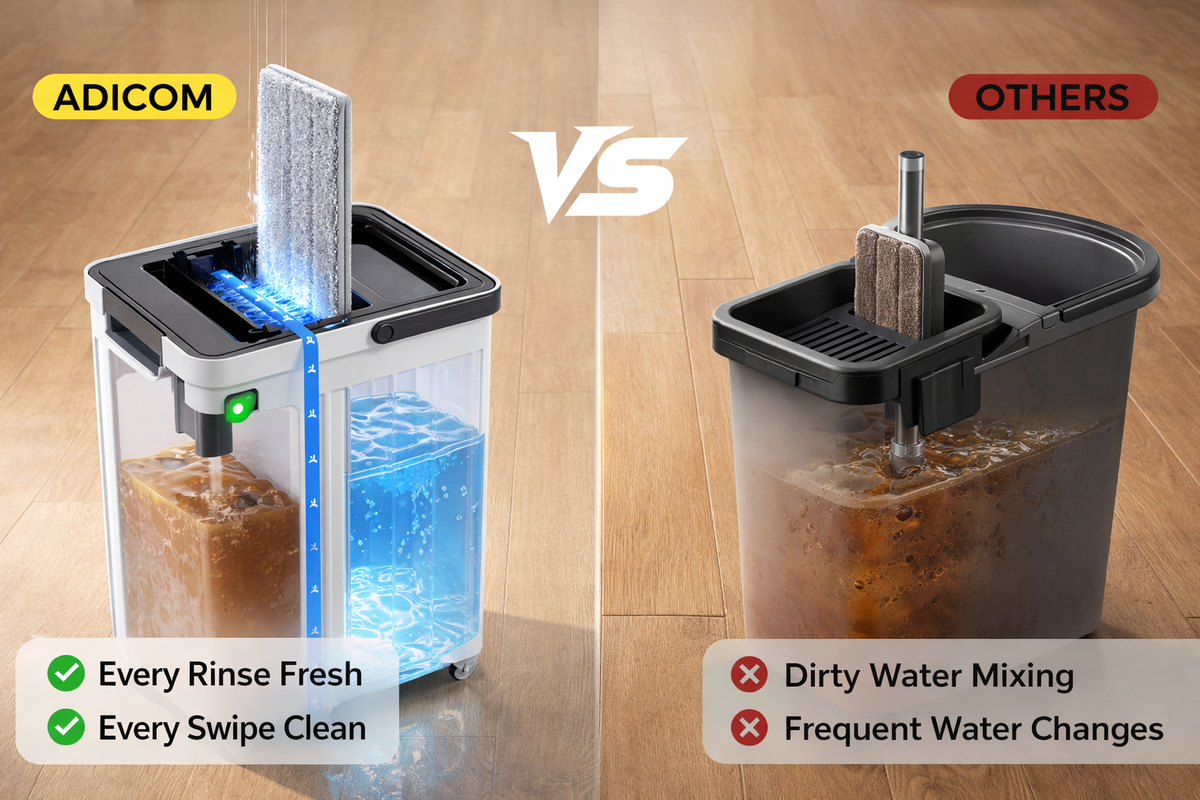
An electric pump mop bucket replaces manual mechanical pressure with a battery-powered pump connected to built-in spray jets inside the rinse chamber.
The process is fundamentally different:
- You place the mop head into the rinse chamber
- The electric pump activates automatically—no pressing, no pedaling
- Spray jets deliver a consistent, high-pressure water stream that thoroughly flushes the mop from multiple angles
- Dirty water drains into the isolated tank
The water pressure is consistent every single time, regardless of the user's strength or energy level. The rinse is more thorough because the jets are positioned to flush the mop head evenly rather than relying on a single stream directed by manual pressure.
This is the core mechanical difference—and it has downstream effects on cleaning quality, physical effort, and overall experience that are worth examining in detail.
Head-to-Head: Electric vs Manual Pump Mop Bucket
1. Rinsing Thoroughness
The purpose of any mop bucket rinse system is to remove what the mop picked up from the floor and restore it to a clean state before the next pass. How thoroughly that happens directly affects how clean your floors get.
With a manual pump system, the rinse quality varies. A strong, sustained pump delivers a decent flush. A quick or weak pump leaves residue in the mop fibers. In practice, most users don't pump with maximum force every time—especially later in a cleaning session when fatigue sets in. This means the mop is often only partially rinsed, and the dirt it carries forward gets transferred to the next section of floor.
An electric pump system delivers the same pressure and coverage on the first rinse as on the fiftieth. The spray jets are fixed in position, the pump draws consistent power from the battery, and the mop gets a thorough flush every single time—regardless of whether it's the first room or the last.
For households where floor cleanliness matters—light-colored flooring, allergy-sensitive environments, homes with children or pets who spend time on the floor—this consistency is the difference between floors that are genuinely clean and floors that merely appear clean.
Winner: Electric pump mop bucket
2. Physical Effort
This is perhaps the most immediate practical difference between the two systems.
A foot-pedal mop and bucket set requires repeated physical input throughout the entire cleaning session. Every rinse cycle means another pump. In a full home clean that involves 30, 40, or 50 rinse cycles, that's 30 to 50 separate pumping actions on top of the effort of pushing the mop itself.
For younger, able-bodied users cleaning a small space, this may be a minor inconvenience. For anyone with knee pain, hip issues, lower back sensitivity, or reduced grip strength, foot-pedal systems can make cleaning genuinely uncomfortable—or cause users to skip rinsing steps to avoid the effort, which defeats the purpose of the system entirely.
Electric pump systems require zero physical input at the rinse stage. Place the mop in the chamber. The pump does the rest. The effort saved is small on any individual rinse but adds up meaningfully across a full cleaning session—and makes a significant difference for users who find repetitive physical tasks painful or tiring.
Winner: Electric pump mop bucket
3. Cleaning Speed
Speed matters in a practical cleaning routine. The faster a rinse cycle completes, the faster you move through the home.
Manual pump systems are limited by how quickly you can pump and how many pumping actions are needed to fully flush the mop. Longer mop fibers or heavily soiled pads may need multiple pump strokes to rinse adequately, adding time at each rinse stop.
Electric pumps deliver a fixed, high-pressure flush in a consistent duration every time. The rinse cycle is quick, complete, and doesn't require you to judge whether you've pumped enough. In terms of time-per-rinse, electric systems are reliably faster.
Across a full home cleaning session, the cumulative time saved on rinse cycles is genuinely noticeable—particularly in larger homes where rinse frequency is higher.
Winner: Electric pump mop bucket
4. Consistency Across Users
Manual pump performance varies not just across different sessions with the same user, but also between different users. A child, an elderly family member, or anyone with reduced physical capability will produce a weaker pump than a healthy adult—resulting in a less thorough rinse and a less effective clean.
Electric pump systems deliver identical performance regardless of who is operating them. The pump runs at the same pressure whether it's used by a teenager doing a quick clean or a senior managing their own home. The clean result is consistent because the system doesn't depend on user input for its performance level.
For households where multiple people share cleaning responsibilities, this matters more than it might initially seem.
Winner: Electric pump mop bucket
5. Maintenance and Durability
Manual pump mechanisms are mechanically simple—fewer components, fewer potential failure points. A foot pedal or hand pump has a straightforward mechanical linkage that is relatively easy to maintain and unlikely to break down.
Electric pump systems add a battery, motor, and electronic components to the equation. These require occasional charging and introduce the possibility of electrical component wear over time. The battery will eventually degrade with repeated charge cycles, as with any rechargeable device.
That said, quality electric mop bucket systems are built for regular home use, and a full charge typically supports a significant number of rinse cycles—some rated for 60 or more bucket uses per charge. For regular household cleaning, recharging frequency is low.
Winner: Manual pump mop bucket (on simplicity and long-term mechanical reliability)
6. Upfront Cost
Manual pump mop and bucket sets are generally less expensive than electric pump versions. The simpler mechanical design means lower manufacturing cost, which translates to a lower retail price.
Electric pump systems carry a premium that reflects the motor, battery, and spray jet components. The gap varies by brand and quality tier, but the electric version will typically cost more upfront.
As with most tool decisions, the relevant question isn't just the purchase price—it's the value delivered relative to cost. For households that clean frequently and prioritize result quality and physical ease, the electric system justifies the premium. For infrequent cleaners or those primarily concerned with upfront spend, the manual pump is a reasonable alternative.
Winner: Manual pump mop bucket (on upfront price)
7. Long-Term Value
Upfront cost aside, electric pump systems tend to deliver better long-term value for regular users.
Floors cleaned more thoroughly require less repeat work. Mop pads rinsed more completely last longer before replacement. Time saved across dozens of cleaning sessions accumulates into a meaningful total. And for users who skip rinse steps on a manual system to avoid effort—essentially negating the water separation benefit—the electric system is the only version that actually delivers on the promise of cleaner floors consistently.
Winner: Electric pump mop bucket
Which System Is Right for You?

Choose an electric pump mop bucket if:
- You clean regularly and want consistent, effort-free results every session
- You have a larger home where rinse frequency is high
- Joint pain, back issues, or physical fatigue make repetitive pumping uncomfortable
- You have light-colored flooring where residue and streaking are visible
- Multiple household members share cleaning duties and consistent results matter
Choose a manual pump mop and bucket set if:
- You clean infrequently and upfront cost is the primary consideration
- You're cleaning a small space where total rinse cycles per session are low
- You prefer mechanical simplicity with no charging requirement
- You want a reliable backup system for occasional use
What to Look for in an Electric Pump Mop Bucket
If you've decided the electric system is the right fit, here are the features that separate a quality unit from a basic one:
Battery life and charge cycles — Look for a system rated for at least 40–60 full rinse uses per charge. This ensures you can complete multiple cleaning sessions between charges without interruption.
Spray jet positioning — The best systems use multiple jets positioned to flush the mop head from different angles simultaneously, rather than a single stream. This matters for thorough, even rinsing.
True dual-tank separation — Electric pump or not, the clean and dirty water must be physically separated. Confirm the system uses separate compartments, not a single bucket with a partition.
Tank capacity — A minimum of 5–6 liters per compartment ensures a full home can be cleaned on one fill. Smaller tanks mean more refill interruptions.
Bottom drain plug — Essential for easy emptying of the dirty tank without lifting or tipping a heavy, water-filled bucket.
Built-in wheels — Mobility matters when the bucket is full. Wheels allow smooth movement between rooms without carrying the unit.
Adjustable mop handle — Multiple extension rod lengths let you set the mop height for comfortable use without bending.
The Bottom Line
Both electric and manual pump systems are genuine improvements over traditional single-bucket mopping. Both separate clean and dirty water. Both rinse the mop with fresh water rather than reusing contaminated water.
But on almost every practical measure—rinsing thoroughness, physical effort, cleaning speed, consistency across users, and long-term value—the electric pump mop bucket delivers a meaningfully better experience.
The manual pump system is a reasonable entry point for infrequent cleaners or those with upfront budget constraints. For anyone who cleans regularly, cares about results, or finds repetitive physical tasks difficult, the electric system isn't just a convenience upgrade—it's the version that actually delivers on the promise of clean floors every time.
Frequently Asked Questions
What is the difference between an electric and manual pump mop bucket?
A manual pump mop bucket uses foot-pedal or hand-pump pressure to push water through the rinse system. An electric pump mop bucket uses a battery-powered motor and spray jets to flush the mop automatically—with no physical input required from the user.
Is an electric mop bucket worth the extra cost?
For regular home use, yes. The consistent rinse quality, reduced physical effort, and time saved across repeated cleaning sessions justify the premium for most households that clean frequently.
How long does the battery last on an electric mop bucket?
Quality electric mop bucket systems are typically rated for 40–60 full rinse cycles per charge. For most home cleaning sessions, this means multiple cleans between charges.
Can I use an electric mop bucket without the pump running?
Yes. Most electric mop bucket systems allow you to use the scraper or wringer function without activating the pump—useful when you want to dry the mop without rinsing. Simply switch off the electric mode before using the drying function.
Do electric mop buckets still separate clean and dirty water?
Yes. Water separation is a function of the dual-tank design, not the pump type. Both electric and manual pump systems use separate clean and dirty water compartments. The pump type only affects how the rinse is delivered, not whether separation occurs.
What floors can I use a mop and bucket set on?
Most flat mop and bucket sets are compatible with hardwood, tile, laminate, stone, vinyl, and other sealed floor types. Always check manufacturer guidance for unsealed or wax-finished surfaces.
The ADICOM Mop and Bucket Set uses an electric pump rinse system with dual-tank water separation—designed to deliver a consistent, thorough clean on every rinse cycle, with zero manual pumping required. Explore the full system here.