Bathroom floors are cleaned more frequently than almost any other surface in the home—and yet they're often the hardest to get genuinely clean. The combination of tile grout, moisture, soap scum residue, and tight spaces around fixtures creates cleaning challenges that a standard mop and bucket approach handles poorly.
The wrong floor mop in a bathroom doesn't just clean inadequately. It leaves soap residue in grout lines, misses the floor area around the base of the toilet and behind the door, and requires repeated passes that still don't produce the result you're looking for. Over time, this leads to grout discoloration, persistent odor, and a floor that never quite looks as clean as it should even after cleaning.
The right mop for floor cleaning in a bathroom changes that entirely. It reaches where standard mops can't, handles the specific grime types bathrooms produce, and works with the tile and grout surfaces that make up most bathroom floors—delivering a result that's actually clean rather than just temporarily wet.
Here's how to choose the right one.
What Makes Bathroom Floors Different From Other Floors
Before getting into mop types and features, it's worth understanding exactly what bathroom floors demand that other floors don't—because the cleaning challenges are specific enough to make equipment selection genuinely matter.
Soap scum and product residue — Every shower or bath deposits a fine film of soap, shampoo, and body wash residue on the surrounding floor. This residue bonds to tile and grout, builds up with each session, and creates a hazy, dull surface that attracts more dirt. Standard floor cleaner cuts through light residue but struggles with accumulated soap scum without a targeted approach.
Moisture and humidity — Bathroom floors are wet repeatedly throughout the day. This constant moisture cycling makes grout particularly vulnerable to mold and mildew growth. A floor mop that leaves excess water on the bathroom floor after cleaning extends the moisture exposure and worsens this problem. Controlled moisture application that dries quickly is essential.
Tight spaces around fixtures — The area around the base of the toilet, behind the toilet, between the toilet and the bathtub, along the edge of the vanity, and in the corner behind the door are the hardest areas to reach—and the areas where grime accumulates most heavily. A mop that can't reach these spaces leaves the most contaminated areas of the bathroom floor untouched every cleaning session.
Grout-heavy surfaces — Most bathroom floors are tiled, which means a significant portion of the floor surface is grout rather than tile. Grout is porous, absorbs contamination, and discolors from soap scum and mildew. Effective bathroom floor cleaning requires a mop that engages with grout directly, not one that skims across the tile surface while missing the recessed lines between.
Hygiene requirements — Bathroom floors carry bacteria from toilet proximity, foot traffic, and moisture. The hygiene standard for bathroom floor cleaning is higher than for most other surfaces in the home, which means both the cleaning method and the cleanliness of the mop itself matter more.
Types of Floor Mops: How They Perform in Bathrooms

String Mops
String mops are among the least suitable options for bathroom floor cleaning, despite being widely used.
The strand construction that makes string mops recognizable is precisely what makes them ineffective in bathrooms. The loose strands wrap around toilet bases and fixture edges rather than cleaning them. The large, bulky mop head can't maneuver into the tight spaces behind the toilet or in the corner behind a door without the handle catching on the wall or the fixture itself.
More critically, string mops don't rinse clean effectively. The strand construction traps bacteria, soap scum residue, and mildew spores deep in the fibers, and repeated use without thorough rinsing and drying between sessions makes the mop itself a source of bathroom contamination. A damp string mop left in a bucket between sessions develops odor quickly—and that odor transfers to the floor on the next use.
For a space where hygiene is a primary concern, a mop that becomes a bacterial reservoir between sessions is a fundamental problem.
Verdict: Not recommended for bathroom floors
Sponge Mops
Sponge mops perform better in bathrooms than string mops on maneuverability—the rectangular head is more predictable and easier to direct around fixtures than loose strands. The absorbent sponge material picks up liquid spills effectively.
The limitation is the same hygiene problem as string mops, only more pronounced. Sponge material is porous and difficult to fully sanitize between uses. Soap scum, body oils, and bacteria get trapped in the open-cell structure and are extremely difficult to rinse out completely, even with thorough wringing. Mildew growth inside a sponge mop head used regularly in a humid bathroom environment is essentially inevitable without aggressive disinfection between sessions.
Sponge mops also deposit excess moisture on bathroom floors during the cleaning pass—a problem in a space where fast drying is important. The wringing mechanism reduces but doesn't eliminate this, and the damp floor surface after cleaning extends the conditions that promote mold and mildew growth in grout.
Verdict: Better than string mops, but hygiene limitations make it a poor choice for regular bathroom use
Flat Microfiber Mops
Flat microfiber floor mops are the most effective standard option for bathroom floors across all the relevant criteria.
The flat head profile sits close to the floor surface and slides under toilet bases, around fixture edges, and along baseboards with a precision that bulkier mop types can't match. In a space defined by tight clearances and obstacle-dense floor plans, this maneuverability is not a minor convenience—it's the difference between actually cleaning the bathroom floor and cleaning only the open areas while leaving the most contaminated spots untouched.
Microfiber material addresses the hygiene problem directly. The ultra-fine fiber construction physically captures and holds bacteria, soap scum particles, and debris in the pad rather than just moving them around. After use, the pad is removed and machine washed—genuinely restoring it to clean condition between sessions. A freshly laundered microfiber pad used on a bathroom floor isn't carrying contamination from the previous session. A string mop or sponge head is.
The microfiber material also cleans grout more effectively than string or sponge alternatives because the fine fibers engage with the textured grout surface at a microscopic level, pulling contamination out of the porous material rather than passing over it. On soap-scum-heavy bathroom tile, microfiber with an appropriate cleaning solution produces noticeably better results than cotton or synthetic strand mops.
Verdict: Strongly recommended for bathroom floors
Steam Mops
Steam mops for floor cleaning have a specific and valuable role in bathroom cleaning: periodic high-temperature sanitizing that kills mold spores, bacteria, and dust mites in grout and tile without chemical products.
For bathrooms where mold or mildew in grout is a recurring problem, a steam treatment every few weeks—after the regular mop pass—can significantly reduce regrowth by eliminating the spores that cause it. The heat penetrates grout pores more effectively than chemical surface treatments in many cases.
The practical limitation for bathroom floors is the same as for other surfaces: steam mops take time to heat up, aren't suited for all floor materials, and are slower to cover the full floor area than a flat mop. For the regular weekly or twice-weekly bathroom floor cleaning session, a flat microfiber mop is faster and more practical. Steam works best as a periodic supplement rather than the primary daily-use tool.
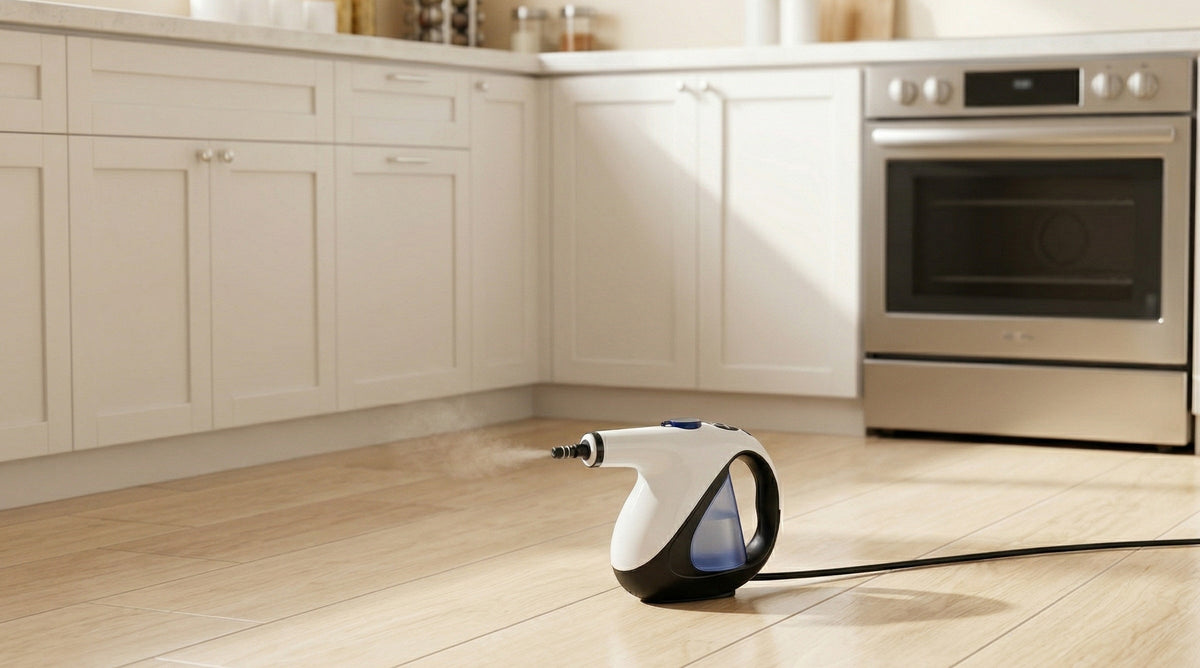
For a handheld steam cleaner used specifically on grout lines, tile surfaces, toilet bases, and other spot-treatment areas, the value is higher—targeted steam application on specific bathroom grime is one of the strongest use cases for handheld steam cleaners in the home.
Verdict: Excellent periodic supplement for grout sanitizing, not the primary daily-use tool
Flat Mop and Bucket Systems
A flat microfiber floor mop paired with a dual-tank bucket system is the most complete solution for bathroom floors cleaned on a regular schedule.
The mop performance advantages of flat microfiber apply here as before. What the bucket system adds is consistent rinse water quality throughout the cleaning session—which matters specifically in bathrooms because bathroom floor cleaning picks up more concentrated contamination per square foot than most other floor surfaces.
Soap scum, body oils, toilet proximity bacteria, and mildew residue all load a mop pad quickly in a bathroom setting. Rinsing that pad back into a single shared bucket contaminates the rinse water almost immediately, meaning subsequent passes deposit diluted contamination rather than cleaning. A dual-tank system that separates clean and dirty water ensures every rinse cycle uses genuinely fresh water—keeping the mop pad clean through the full session regardless of how heavily the bathroom floor is soiled.
For households with multiple bathrooms cleaned in sequence, the large tank capacity of quality dual-tank systems covers multiple rooms on a single fill, eliminating the need to change water between each bathroom.
Verdict: Best overall system for regular bathroom floor cleaning
Key Features to Look for in a Bathroom Floor Mop
Not all flat mops are equally suited to bathroom cleaning. Here are the specific features that make a meaningful difference in this environment:
Low-profile flat head — The closer the mop head sits to the floor, the further it reaches under toilet bases and along the edges of vanities and bathtubs. A flat head that maintains consistent floor contact regardless of angle is essential for bathroom coverage.
Pivoting mop head — Bathroom floors require constant direction changes around obstacles. A mop head that pivots freely at multiple angles—rather than being fixed or limited to a single pivot axis—reaches into corners and around fixtures without requiring the handle to change position.
Slim head profile — The space between the toilet base and the wall, and between the toilet and the bathtub, is often very narrow. A mop head that's narrower than a standard flat mop accesses these spaces. Some flat mops have triangular or narrow rectangular heads specifically for this reason.
Machine-washable microfiber pads — Non-negotiable for bathroom use. The hygiene requirement of bathroom floor cleaning makes pad laundering between sessions essential, not optional. Ensure pads are machine washable and that the mop system includes enough pads to rotate between sessions without waiting for one to dry.
Adjustable handle length — Bathroom cleaning involves working in tight spaces where a full-length handle is sometimes a hindrance. Adjustable extension rods let you shorten the handle for maneuvering around fixtures and lengthen it for open floor areas and reaching behind the toilet without bending.
Scraper or wringer function — Bathroom floors benefit from a mop that's on the drier side during application. Excess moisture extends drying time and promotes the conditions where mold and mildew thrive. A bucket with an effective wringer, scraper, or rinse system that removes excess water from the pad before each pass keeps moisture application controlled.
Dual-tank water separation — As discussed, bathroom grime loads rinse water quickly. Clean-water separation ensures the mop is always rinsed with fresh water, maintaining cleaning effectiveness across the full bathroom floor rather than declining after the first few passes.
Cleaning Different Bathroom Floor Materials
Bathroom floors come in several common materials, and the right mop approach varies by surface type.
Ceramic and porcelain tile — The most common bathroom floor material and the most forgiving for mop for floor cleaning use. Compatible with most cleaning solutions, tolerates moderate moisture, and responds well to microfiber cleaning. Grout lines are the primary challenge—see the grout section below.
Natural stone (marble, travertine, slate) — Requires a pH-neutral cleaner and careful moisture control. Acidic cleaners etch stone surfaces and cause permanent damage. Microfiber is appropriate for the mop material; ensure the cleaning solution is specifically labeled as stone-safe. Avoid steam on unsealed natural stone.
Vinyl and LVP (Luxury Vinyl Plank) — Moisture-tolerant and durable. Compatible with flat microfiber mops and most bathroom floor cleaning solutions. Less grout-intensive than tile, making regular maintenance mopping more effective at maintaining cleanliness.
Cement tile — Porous and sensitive to acidic cleaners. Requires pH-neutral cleaning solution and controlled moisture. Microfiber is appropriate but avoid excessive scrubbing pressure that can dull the surface.
Mosaic tile — More grout surface area relative to tile than standard tile formats, meaning grout cleaning is proportionally more important. A flat microfiber mop engages well with mosaic surfaces. Grout pre-treatment is particularly valuable on mosaic bathroom floors.
How to Handle Grout on Bathroom Floors

Grout is the primary long-term cleaning challenge on most bathroom floors, and it requires specific attention beyond what a standard mop pass delivers.
Why bathroom grout discolors — Grout is porous. Soap scum, body oils, mildew, and cleaning solution residue all penetrate into the grout material over time. The visible discoloration of grout isn't just surface staining—it's contamination embedded in the material itself, which is why surface-level mopping doesn't change grout color.
Regular maintenance — A flat microfiber mop used with appropriate bathroom cleaner maintains grout color when the floor is cleaned frequently enough that contamination doesn't accumulate between sessions. Weekly cleaning in an active bathroom is the minimum for effective grout maintenance.
Targeted grout treatment — When grout has discolored despite regular cleaning, pre-treatment is necessary. Apply a grout-specific cleaner or a diluted oxygen bleach solution directly to grout lines, allow it to dwell for the time specified on the product, and scrub with a dedicated grout brush before the mop pass. This is the only approach that effectively lifts embedded contamination from within grout rather than just cleaning the surface.
Mildew in grout — Mildew in bathroom grout indicates a moisture and ventilation problem that cleaning addresses symptomatically but doesn't solve at the source. Ensure adequate bathroom ventilation, address any water intrusion, and consider a periodic steam treatment on grout to kill mildew spores at the source. Cleaning mildewed grout without addressing the underlying moisture conditions results in rapid regrowth regardless of the cleaning method used.
Grout sealing — Properly sealed grout is significantly more resistant to contamination absorption and easier to clean with a standard mop pass. If bathroom grout is cleaned and restored to a satisfactory color, applying a grout sealer extends the time before significant re-discoloration occurs. Reapply sealer every one to two years depending on bathroom use and the sealer product used.
Building a Bathroom Floor Cleaning Routine
The right floor mop is most effective within a consistent routine. For bathroom floors specifically, here's what an effective schedule looks like:
Weekly (or twice weekly in heavily used bathrooms): Full mop pass with flat microfiber mop and dual-tank bucket system using bathroom-appropriate cleaner. Focus on open floor areas, around the toilet base, along the bathtub edge, and the perimeter along baseboards.
Monthly: Pre-treat grout lines with a targeted grout cleaner and scrub with a grout brush before the standard mop pass. Address the area behind the toilet and under vanity units thoroughly with the mop pad and a narrow brush for the floor-to-wall junction.
Every two to three months: Steam treatment on grout lines and tile surfaces for deep sanitizing of mildew spores and embedded contamination that regular mopping doesn't fully address. Inspect grout condition and reapply grout sealer if the surface appears to be absorbing cleaning solution readily.
After each session: Machine wash mop pads immediately. Empty and rinse both tanks of the bucket system. Allow the bucket to air dry fully before storage to prevent odor development.
Mistakes That Make Bathroom Floor Cleaning Less Effective
Mopping in the wrong direction — Always mop from the area farthest from the bathroom exit toward the door, so you're not stepping back onto wet cleaned surfaces. In a bathroom, start behind the toilet and around the bathtub, work toward the vanity, then exit mopping the threshold area last.
Skipping the toilet base area — The floor around the base of the toilet accumulates the highest concentration of bacteria on the bathroom floor. It's also the hardest area to reach. Deliberately working the mop into this area on every session—using the pivoting head to get around the porcelain base—is essential for genuine bathroom hygiene.
Using the same pad for the bathroom and other floors — Maintain separate mop pads for bathroom use and the rest of the home. Even with machine washing between sessions, cross-using bathroom pads on kitchen or bedroom floors is poor hygiene practice.
Leaving the floor wet — Excess moisture after mopping promotes the mold and mildew growth that makes bathroom grout cleaning difficult. Use a well-wrung pad that applies controlled moisture and opens a window or runs the exhaust fan after cleaning to accelerate drying.
Relying on the mop alone for grout — As covered above, a mop pass maintains grout but doesn't restore it once contamination is embedded. Regular targeted grout treatment with appropriate products and a brush is the only approach that actually addresses grout discoloration.
Reusing contaminated rinse water — In a bathroom deep clean, the rinse water in a single bucket becomes heavily contaminated within a few passes. Continuing to use this water means depositing bathroom bacteria back onto a floor you're trying to sanitize. A dual-tank system that keeps clean water separated from dirty water is the only way to ensure every rinse cycle actually cleans the mop.
The Bottom Line
Bathroom floor cleaning is more demanding than it appears. The combination of grout-heavy surfaces, persistent soap scum, hygiene requirements, and tight spaces around fixtures creates a cleaning environment where the wrong floor mop produces inadequate results no matter how frequently it's used.
A flat microfiber mop for floor cleaning with a pivoting head, machine-washable pads, and an adjustable handle addresses every specific challenge bathroom floors present—reaching where other mops can't, cleaning grout more effectively than strand or sponge alternatives, and restoring to genuine hygiene between sessions through machine washing.
Paired with a dual-tank bucket system that maintains clean rinse water throughout the session, it's the combination that produces bathroom floors that are actually clean rather than just visually mopped. The difference is noticeable—in the clarity of tile, the color of grout, and the absence of the persistent odor that accumulates in bathrooms where cleaning is frequent but cleaning equipment is inadequate.
Frequently Asked Questions
What is the best type of mop for bathroom floors? A flat microfiber mop is the best option for most bathroom floors. The low-profile head reaches around toilet bases and fixture edges, the microfiber material cleans grout more effectively than string or sponge alternatives, and machine-washable pads restore to genuine hygiene between sessions—addressing the specific demands of bathroom floor cleaning.
How often should bathroom floors be mopped? Weekly mopping is the minimum for maintaining bathroom floor hygiene in a regularly used bathroom. Heavily used bathrooms—shared by multiple people or used multiple times daily—benefit from cleaning twice per week. Monthly targeted grout treatment supplements regular mopping for grout maintenance.
Can I use the same mop for bathroom and kitchen floors? It's best practice to use separate mop pads for bathroom and kitchen floors, even if using the same mop body. Designate specific pads for bathroom use and keep them separate from pads used elsewhere in the home to prevent cross-contamination.
Why does my bathroom floor still smell after mopping? Persistent odor after mopping typically indicates either mildew in grout that surface cleaning doesn't address, a contaminated mop that's redepositing bacteria during cleaning, or insufficient drying after the mop pass. Address grout mildew with targeted treatment, ensure mop pads are machine washed between sessions, and improve post-cleaning ventilation to accelerate floor drying.
How do I clean bathroom floor grout effectively? Pre-treat grout lines with a grout-specific cleaner or diluted oxygen bleach solution, allow it to dwell for several minutes, and scrub with a dedicated grout brush before the mop pass. Regular weekly mopping with a flat microfiber mop maintains grout condition between targeted treatments.
Is a steam mop good for bathroom floors? Steam is excellent for periodic deep sanitizing of bathroom tile and grout—particularly for killing mildew spores. For regular weekly cleaning sessions, a flat microfiber mop is more practical. The best approach combines both: regular flat mop maintenance with periodic steam treatment for high-temperature sanitizing.
What floor cleaner should I use for bathroom tiles? Use a bathroom-specific cleaner or one labeled for tile and grout. For soap scum buildup, look for products with mild acid formulation appropriate for ceramic or porcelain tile. Always check compatibility with your specific floor material—products suitable for ceramic tile may not be appropriate for natural stone.
The ADICOM Mop and Bucket Set combines a pivoting flat microfiber mop with dual-tank water separation and an electric pump rinse system—designed to reach every corner of a bathroom floor and deliver clean rinse water on every cycle, session after session. See the full system here.